

The Same Hands
Twenty-one years apart, the same inmate drove a shank into a correctional officer. The system had two decades to make sure it couldn’t happen again. It wasn’t enough.


By Russ Hamilton
On March 9, 2026, at approximately 10:15 in the morning, an officer working a cell block at California State Prison, Sacramento was attacked by an inmate armed with an improvised weapon. The officer sustained multiple puncture wounds before staff responded with physical force and quelled the assault. He was treated at the scene, transported to an outside hospital, and — by the grace of God and the speed of his partners — reported in good condition awaiting discharge.
The inmate’s name was Jon Christopher Blaylock. He was 56 years old.
If that name doesn’t ring a bell, it should. Because this wasn’t the first time Blaylock buried a blade in a correctional officer. It wasn’t even the second time he attacked one. And the reason he was still breathing inside a CDCR institution — still close enough to touch staff — is a story that every officer, sergeant, lieutenant, and administrator in this profession needs to hear.
January 10, 2005
Correctional Officer Manuel A. Gonzalez Jr. reported for duty at the California Institution for Men in Chino on what should have been an unremarkable Monday. He was 43 years old. Sixteen years on the job. A father of six. He was working Sycamore Hall.
Jon Christopher Blaylock had been designated as a “spokesman” for the Black inmate population in the unit. Racial tensions had been simmering, and staff had released Blaylock from his cell to address complaints from other inmates. A witness later told San Bernardino County Sheriff’s investigators that Blaylock called Officer Gonzalez toward him. The two began walking together near a row of cells. Then Blaylock pulled a knife from his waistband and drove it into Gonzalez — three times in the chest and abdomen, once in the arm. One wound pierced his heart. Two others tore through his pancreas and spleen.
Officer Gonzalez fell to the ground. He was transported to a local hospital, where he was pronounced dead. The time was 11:52 a.m.
It was the first line-of-duty murder of a California correctional officer in twenty years.
The Vest That Sat in a Warehouse
Here’s what still haunts me — and what should haunt every administrator reading this.
Officer Gonzalez was not wearing a protective vest when he was killed.
Not because the department hadn’t purchased one. Not because he hadn’t been fitted for one. His vest existed. It had his name on it. It was sitting in a warehouse on the grounds of CIM.
The institution had ordered 900 stab-resistant vests as part of a budget change proposal and an agreement with CCPOA. By January 2005, 352 of those vests had arrived and were stored in the CIM warehouse. But administration made a decision — a decision born of bureaucratic convenience dressed up as fairness — not to distribute any of the vests until the entire order had been received.
The reasoning? Warden Lori DiCarlo characterized it as a fairness issue: who should be favored if only some staff could be outfitted?
I’ll tell you who should have been favored. The ones walking the tier. The ones distributing sack lunches in Sycamore Hall. The ones standing within arm’s reach of a man like Jon Blaylock.
Instead, 352 protective vests collected dust for over four months while officers worked the most dangerous housing units in the state without them.
Within days of Officer Gonzalez’s death, every single one of those vests was quietly issued.
Let that sink in. The fix took days. The failure took a life.
A Predator in a Petting Zoo
Blaylock should never have been in general population at CIM. Not for a single day.
He arrived at CIM on June 23, 2004, transferred from Los Angeles County after being sentenced to 75-years-to-life as a third striker for the attempted first-degree murder of an LAPD officer. He was East Coast Crips. He was a Level IV — maximum security — inmate. CIM was a Level III reception center.
The Inspector General’s report laid it bare: Blaylock’s classification committee reviewed his case four times during his seven months at CIM and essentially ignored his violent history. He had over twenty documented citations for violence against staff and other inmates, including possession and use of weapons. On July 31, 2004, he stabbed another prisoner. He was placed in administrative segregation — then returned to general population on September 22nd.
He was a maximum-security predator in a General Population enclosure, and the people responsible for his placement knew it.
After a riot and a series of stabbings between December 6, 2004 and January 9, 2005, Blaylock — a reputed shot caller — told officers that inmates blamed staff for permitting the attacks and wanted to “get the responsible guards.” That threat was never elevated to the warden for review.
During the post-incident search of Sycamore Hall, staff recovered 35 stabbing and slashing instruments. Some were rusted with age, hidden in toilets and pipe chases. That’s not an inmate smuggling problem. That’s an institutional search failure — the kind that only happens when cell searches become a checkbox instead of a mission.
Eighteen Years to Trial
You would think that the murder of a correctional officer — committed in broad daylight, with witnesses, inside a state institution — would result in a swift prosecution.
You would be wrong.
Blaylock wasn’t formally charged until March 2007 — more than two years after Officer Gonzalez bled out on the floor of Sycamore Hall. The San Bernardino County District Attorney’s Office sought the death penalty.
Then the case imploded.
Prosecutors improperly obtained Blaylock’s confidential medical and psychological records from the prison. Judge Ingrid Uhler recused a large portion of the DA’s office from the case. Even after Judge Uhler ruled in 2007 that there was sufficient evidence for trial, criminal proceedings were stayed in 2010 over questions about Blaylock’s mental competency.
What followed was a 13-day competency trial in late 2012. Seven mental health professionals testified. Defense experts said Blaylock suffered from severe grandiose delusions — that he believed he was a member of Dutch royalty, and that correctional officers were conspiring to kill him. The prosecution argued he was a manipulator who knew exactly how to game the system. One defense expert who spent 45 minutes with Blaylock billed over $12,000 for his testimony.
The jury found Blaylock competent. The judge overturned the verdict. The appellate court reversed the judge.
The murder trial didn’t begin until June 2023. Eighteen years after a correctional officer was stabbed to death doing his job.
On July 5, 2023, the jury returned a guilty verdict. On August 16, 2023, Jon Christopher Blaylock was sentenced to life without the possibility of parole for the second-degree murder of Correctional Officer Manuel A. Gonzalez Jr.
By that time, Gonzalez’s six children had grown up without their father.
And somewhere during those 18 years, Blaylock picked up yet another life sentence — in 2014, from Los Angeles County — for assaulting someone with a deadly weapon while incarcerated. Because that’s what he does. That’s what he’s always done.
March 9, 2026
And that brings us back to Sacramento.
Twenty-one years after killing Officer Gonzalez. Three years after being convicted. Already serving life without parole, stacked on top of multiple life sentences. Already documented as one of the most violently persistent inmates in CDCR history.
Jon Blaylock fashioned another improvised weapon, waited for his moment, and drove it into another correctional officer.
The officer survived. Staff responded fast. But the question isn’t whether this officer made it — thank God he did. The question is why he had to.
How does the same man — with the same documented history, the same pattern of targeting staff, the same method of attack — get the opportunity to do this again?
Attorney Mark Peacock, who represented the Gonzalez family in their wrongful death lawsuit against CDCR, said it plainly: over 20 years ago, his client was murdered because the state failed to properly protect him. And now, in 2026, the same violent offender is committing the same crimes.
“Part of a corrections officer’s job is risky,” Peacock wrote. “They understand that. But when the state fails to provide protection, it turns that risk into a bullseye.”
The Lesson
I’ve spent over 30 years in this profession. And if I’ve learned one thing, it’s this:
The system doesn’t learn from its dead. It memorializes them. It holds ceremonies. It lowers flags. And then it moves on — until the next one.
Officer Gonzalez’s death did produce changes. Stab-resistant vests became mandatory for all officers with inmate contact. Housing protocols were revised. The OIG issued 42 recommendations. CIM’s warden and two top staff were placed on administrative leave.
But 21 years later, Jon Blaylock — a man whose entire documented existence is a case study in targeted violence against correctional staff — was still in a position to attack an officer with an improvised weapon.
That’s not a failure of the officer on the block at CSP-SAC. That officer did his job and bled for it. That’s a failure of the people who decide where men like Blaylock are housed, how they’re monitored, and what restrictions are placed on their movement.
I wrote in Killing Complacency that the cost of complacency is measured in blood, failure, and regret. The Gonzalez case was supposed to be the wake-up call. The vest in the warehouse. The predator in general population. The 35 shanks hidden in toilets.
Twenty-one years later, the alarm went off again. Same inmate. Same weapon. Same target — a correctional officer just trying to do the job.
The only thing that changed was the officer survived.
This time.
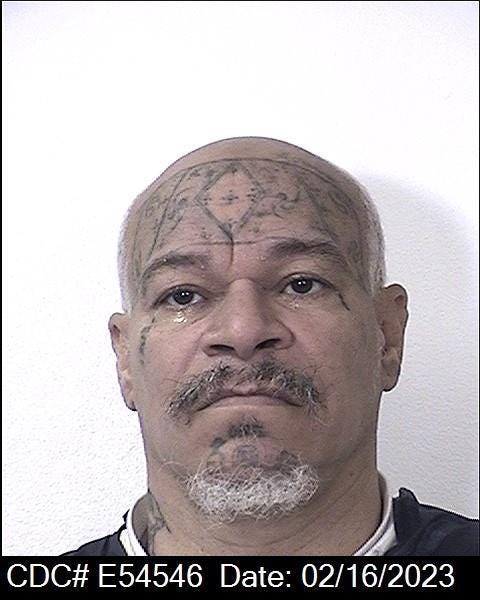
Officer Manuel A. Gonzalez Jr. is survived by his six children. He is buried at Resurrection Catholic Cemetery in Montebello, California. He served 17 years with the California Department of Corrections.
The officer attacked at CSP-SAC on March 9, 2026 has not been publicly identified. He was reported in good condition. The case has been referred to the Sacramento County District Attorney’s Office for possible felony prosecution.
Russ Hamilton is a retired CDCR sergeant, author of Killing Complacency: Tactical Awareness for Correctional Professionals, and co-host of Tier Talk. He writes at The Correctional Cadre on Substack.
Brings back memories of the murder of Minnesota DOC Corrections Officer Joe Gomm on 7/18/2018. Everyone was quitting after that, I went back to try and help foster change.
Thank You for bringing this subject to the general public because they never tell the truth. When Sargent Jere P. Graham was murdered on August 21 1971. All he had to defend himself with was a whistle. He was working the death row block. How many families have been devastated by not being protected from some of the most evil people behind the bars. Maybe if we made the warden’s and other officials do the job of our corrections officers and experience what these men and women do. Maybe that would start to change policies.